Unveiling the Ancient Origins of Yoga


Yoga, a practice that has captivated millions worldwide, traces its roots back to ancient times. Understanding the yoga origin offers insights into its profound impact on the mind, body, and spirit. Today, over 300 million people globally engage in yoga, highlighting its universal appeal and adaptability. This ancient discipline fosters a harmonious connection between the physical and the spiritual, promoting overall well-being. As yoga continues to thrive, its ancient origins remind practitioners of the timeless wisdom embedded in its practice, encouraging a deeper exploration of self-awareness and inner peace.
The Beginnings of Yoga
Pre-Vedic Traditions
Early Practices and Beliefs
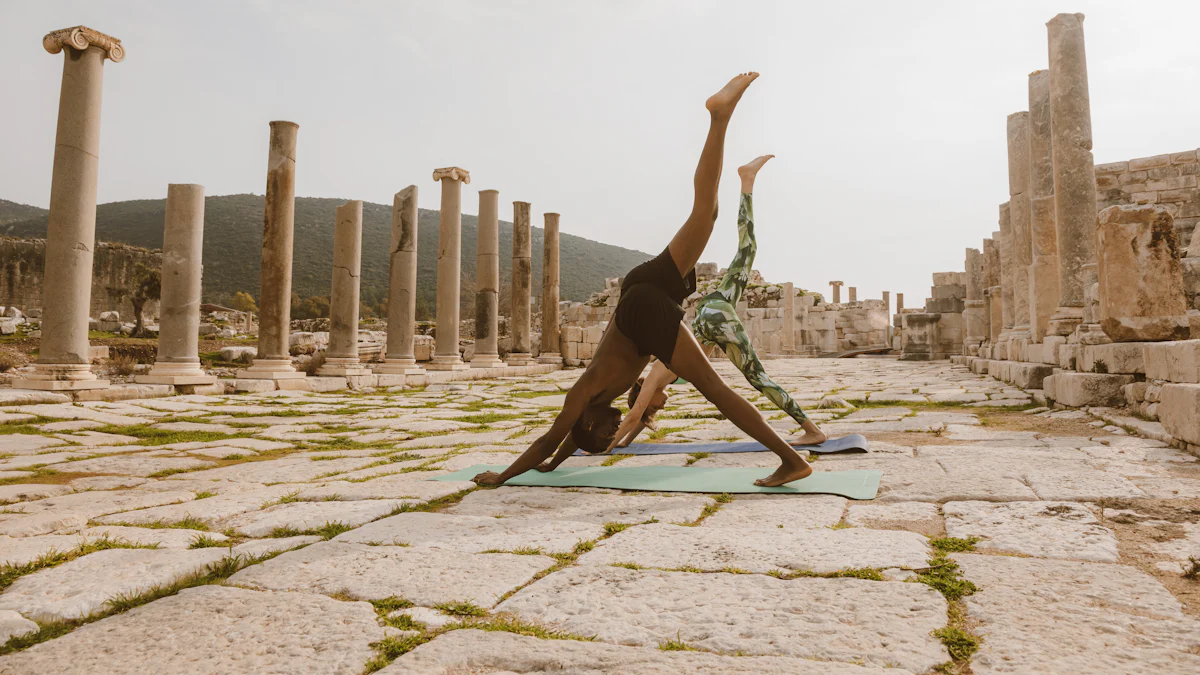
The yoga origin can be traced back over 5,000 years to ancient India. During this time, the Indus-Sarasvati civilisation laid the groundwork for what would become a profound spiritual practice. Early yogic practices focused on uniting the mind, body, and spirit, aiming to achieve a state of harmony and balance. These practices were deeply intertwined with the spiritual and ritualistic life of the people, reflecting their beliefs in the interconnectedness of all existence.
Archaeological Evidence
Archaeological findings from the Indus Valley Civilisation, which thrived from approximately 3300 to 1300 B.C., provide tangible evidence of yoga's ancient roots. Artefacts such as seals and sculptures depict figures in meditative postures, suggesting that yoga was an integral part of the culture. These discoveries highlight the early presence of yoga practices, offering a glimpse into the spiritual life of this ancient civilisation.
Vedic Period
The Role of the Vedas
The Vedic period marked a significant development in the yoga origin. The Rigveda, one of the oldest sacred texts, contains references to yoga practices, indicating its existence around 1500 BCE. The Vedas, revered as the foundational scriptures of Hinduism, played a crucial role in shaping the philosophical underpinnings of yoga. They introduced concepts of meditation and spiritual discipline, which became central to yogic practices.
Development of Rituals and Practices
During the Vedic period, rituals and practices evolved, further enriching the yoga origin. The sages, known as Rishis, documented their spiritual insights and practices in the Upanishads, transferring the foundational wisdom of the Vedas into practical teachings. These texts elaborated on the nature of the self and the universe, providing essential guidance for dedicated yogis. The Upanishads described yoga as a means to realise the true nature of the self and attain liberation from the cycle of birth and death, thus deepening the spiritual dimension of yoga.
Classical Yoga
The Upanishads
Philosophical Foundations
The Upanishads, composed around the 8th century BCE, represent a significant milestone in the yoga origin. These ancient texts delve into the philosophical underpinnings of yoga, offering profound insights into the nature of existence. They describe yoga as a means to realise the true nature of the self and attain liberation from the cycle of birth and death. This liberation, known as moksha, signifies freedom from the endless cycle of samsara, the cycle of death and rebirth. The Upanishads emphasise the importance of understanding one's inner self, advocating for a journey of self-discovery and spiritual awakening.
Key Concepts and Teachings
The Upanishads impart essential knowledge on the practice of yoga and meditation. They introduce key concepts such as Atman (the inner self) and Brahman (the ultimate reality), highlighting the interconnectedness of all beings. The texts encourage practitioners to seek unity with the divine through meditation and introspection. The Upanishads also stress the significance of Karma, the law of cause and effect, which binds individuals to the cycle of rebirth. By understanding and transcending Karma, one can achieve spiritual liberation. These teachings form the bedrock of classical yoga, guiding practitioners towards enlightenment.
The Bhagavad Gita
Integration of Yoga into Daily Life
The Bhagavad Gita, a revered text in the yoga origin, outlines the core principles of yoga. It presents a dialogue between Prince Arjuna and Lord Krishna, exploring the integration of yoga into daily life. The Gita introduces three paths of yoga: Bhakti Yoga (the path of devotion), Jnana Yoga (the path of knowledge), and Karma Yoga (the path of action). Each path offers a unique approach to achieving spiritual growth and enlightenment. The Gita emphasises self-discipline, self-study, and dedication to God, encouraging individuals to live a life of purpose and mindfulness.
Influence on Later Traditions
The influence of the Bhagavad Gita extends beyond its historical context, shaping the evolution of yoga practices. Its teachings have inspired countless generations, providing a framework for integrating yoga into various aspects of life. The Gita's emphasis on selfless action and devotion has resonated with practitioners across cultures, fostering a deeper understanding of the yoga origin. As a cornerstone of classical yoga, the Gita continues to guide individuals on their spiritual journey, promoting harmony between the mind, body, and spirit.
The Yoga Sutras of Patanjali
Structure and Content
The Eight Limbs of Yoga
Patanjali's Yoga Sutras serve as a cornerstone in the history of yoga, offering a structured approach to spiritual practice. The text introduces the concept of the Eight Limbs of Yoga, which guide practitioners towards self-realisation and inner peace. These limbs include:
Yama: Ethical disciplines such as non-violence and truthfulness.
Niyama: Personal observances like purity and contentment.
Asana: Physical postures to prepare the body for meditation.
Pranayama: Breath control to enhance concentration.
Pratyahara: Withdrawal of the senses to focus inwardly.
Dharana: Concentration on a single point or object.
Dhyana: Meditation, leading to a state of uninterrupted flow of consciousness.
Samadhi: A state of blissful union with the divine.
These limbs form a comprehensive framework for achieving spiritual growth and enlightenment. They emphasise the importance of ethical living, physical health, and mental clarity.
Philosophical Significance
The Yoga Sutras present a dualistic philosophy, focusing on the separation of body and spirit. Patanjali's teachings aim for Kaivalya, or the experience of the spirit independently from the body. This approach contrasts with other Indian philosophies that emphasise unity. Patanjali advocates for enhancing sattva, a quality of lucidity and balance, through ethical practices and devotion to Ishvara (a higher power). This path encourages practitioners to cultivate a steady mind, leading to deeper spiritual insights.
Impact on Yoga Philosophy
Interpretation and Commentary
Over the centuries, scholars have interpreted and commented on the Yoga Sutras, enriching its philosophical depth. These interpretations explore the nuances of Patanjali's teachings, offering diverse perspectives on the practice of yoga. Commentators have highlighted the text's emphasis on ethical living and mental discipline, underscoring its relevance in contemporary life. The sutras' focus on theistic practices, such as devotion to Ishvara, has also sparked discussions on the role of spirituality in yoga.
Legacy in Modern Yoga
Patanjali's Yoga Sutras have left an indelible mark on modern yoga practices. The text's structured approach to spiritual growth resonates with practitioners worldwide, providing a timeless guide for personal development. The Eight Limbs of Yoga continue to influence various styles and schools, shaping the way individuals engage with yoga today. As a foundational text, the Yoga Sutras inspire practitioners to explore the depths of their consciousness, fostering a harmonious connection between mind, body, and spirit.
Medieval and Post-Classical Yoga
Tantra and Hatha Yoga
Emergence and Development
During the medieval period, yoga underwent significant transformations with the emergence of Tantra and Hatha Yoga. Tantra yoga embraced the connection between the physical and mental bodies to reach enlightenment. It focused on rituals and practices that aimed to harness the body's energy for spiritual growth. This approach marked a shift from purely meditative practices to those involving physical postures and breath control.
Hatha Yoga, which originated from ancient texts and the Buddhist milieu, played a pivotal role in this evolution. It introduced a systematic approach to physical postures, known as asanas, and breath control, or pranayama. These practices aimed to prepare the body for meditation and spiritual awakening. Hatha Yoga's emphasis on physical discipline laid the foundation for many modern-day yoga variations, making it a direct influencer of the modern yogic movement.
Key Texts and Practices
Key texts such as the Hatha Yoga Pradipika and the Gheranda Samhita documented the principles and practices of Hatha Yoga. These texts served as comprehensive guides, detailing various postures, breathing techniques, and purification practices. They highlighted the importance of balancing the body's energies to achieve a state of harmony and inner peace.
The significance of Hatha Yoga during the Middle Ages cannot be overstated. It acted as a laboratory of internal alchemy, connecting practitioners to ancient wisdom. By focusing on the physical body, Hatha Yoga provided a practical means to explore the depths of consciousness and attain spiritual liberation.
Influence of Bhakti and Sufi Traditions
Syncretism and Adaptation
The medieval period also witnessed the influence of Bhakti and Sufi traditions on yoga. Bhakti Yoga, characterised by devotion and love for the divine, encouraged practitioners to cultivate a personal relationship with God. This approach resonated with many, leading to the integration of devotional practices into yoga.
Sufi traditions, with their emphasis on mysticism and spiritual union, further enriched the yogic landscape. The syncretism between these traditions and yoga led to the adaptation of practices that emphasised love, devotion, and surrender. This blending of spiritual paths fostered a deeper understanding of the interconnectedness of all beings.
Cultural Exchange
Cultural exchange played a crucial role in the evolution of yoga during this period. The interaction between different spiritual traditions facilitated the sharing of ideas and practices. This exchange enriched the yogic tradition, allowing it to evolve and adapt to diverse cultural contexts.
The influence of Shaivism, Tantra, Buddhism, and Jainism on yoga further exemplifies this cultural exchange. These traditions contributed to the development of yoga practices, shaping its philosophical and spiritual dimensions. As a result, yoga continued to thrive, evolving from classical traditions to modern practices that resonate with people worldwide.
The Global Spread of Yoga
Introduction to the West
Key Figures and Movements
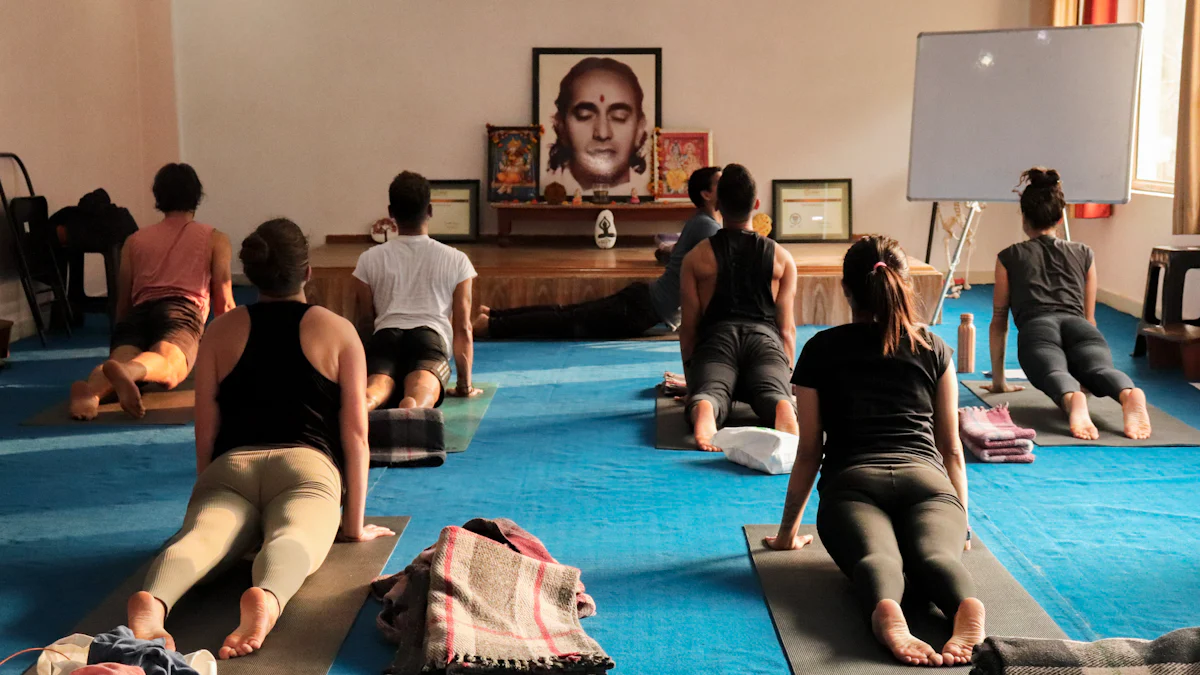
Yoga's journey to the Western world began in the late 19th and early 20th centuries. Swami Vivekananda and Paramahansa Yogananda played pivotal roles in this introduction. They captivated Western audiences with their teachings, highlighting yoga's potential for self-realisation and inner transformation. Vivekananda's address at the Parliament of the World's Religions in Chicago in 1893 marked a significant moment. His eloquence and wisdom sparked interest in yoga's spiritual and physical benefits.
"Pioneering spiritual leaders like Vivekananda and Yogananda played pivotal roles in sharing the benefits of yoga with the world."
Tirumalai Krishnamacharya, another influential figure, contributed to yoga's spread. His teachings laid the groundwork for modern yoga practices. He trained many students who later became renowned yoga teachers, further expanding yoga's reach.
Adaptation and Transformation
As yoga gained popularity in the West, it underwent adaptation and transformation. Western practitioners embraced yoga's physical aspects, leading to the development of various styles. This adaptation made yoga accessible to a broader audience, focusing on physical health and well-being.
Kuvalayananda and Yogendra significantly influenced this transformation. Their work in the post-Vivekanandan yoga revival shaped contemporary yoga practices. Although less known in the West, their contributions are integral to the way yoga is practised today.
"Although Kuvalayananda and Yogendra are largely unknown in the West, their work is a large part of the reason we practice yoga the way we do today."
Modern Yoga Practices
Popular Styles and Schools
Modern yoga encompasses a diverse range of styles and schools. Each offers unique approaches to practice, catering to different preferences and needs. Some popular styles include:
Hatha Yoga: Focuses on physical postures and breath control.
Vinyasa Yoga: Emphasises fluid movement and breath synchronisation.
Ashtanga Yoga: A rigorous style involving a set sequence of postures.
Bikram Yoga: Practised in a heated room, enhancing flexibility and detoxification.
These styles reflect yoga's adaptability, allowing individuals to choose practices that resonate with them.
Yoga in Contemporary Culture
Yoga has become an integral part of contemporary culture, influencing various aspects of life. Its benefits extend beyond physical health, promoting mental clarity and emotional balance. Many people incorporate yoga into their daily routines, seeking stress relief and mindfulness.
The global yoga community continues to grow, with millions of practitioners worldwide. Yoga festivals, retreats, and workshops offer opportunities for individuals to deepen their practice and connect with like-minded individuals. As yoga evolves, it remains a powerful tool for personal growth and well-being.
"Yoga continues to benefit the lives of millions of people on a global scale. If there’s one thing that’s for sure, yoga is well and truly here to stay."
Yoga's historical journey reveals its profound impact on humanity. From ancient India to the modern world, yoga has transcended cultural boundaries, becoming a global phenomenon. Its enduring relevance lies in its ability to promote physical wellness, mental clarity, and spiritual awakening. As globalisation continues, yoga's future appears bright, with increasing personalisation and accessibility. This ancient practice adapts to modern needs, offering a path to self-discovery and inner transformation. Yoga remains a vital part of wellness culture, poised to enrich lives for generations to come.
See Also
Exploring the Explanatory Essence of Yoga Posture Titles
Perfecting the Dove Position in Yoga
Uncover the Finest Yoga Sessions in Peckham

Hi my name is Lia and i am your host in this yoga journey in Portugal, Subscribe to our newsletter to receive every week the best of Yoga in Portugal.

We bring back the importance of initiation into womanhood by Roos-Veerle Krijnen & Ella-June Henrard
Welcome to the Women’s Initiation Retreat by Naked Truth Retreats, a transformative journey into the depths of your True Feminine Nature. This retreat invites you to remember the sacredness and wholeness of your being.
Roos-Veerle Krijnen & Ella-June Henrard