Understanding the 4 Paths of Yoga


Yoga offers you a holistic approach to wellness, blending physical, mental, and spiritual practices. With its roots in ancient traditions, yoga has gained immense popularity worldwide. In the United States alone, about 36 million people practice yoga, highlighting its widespread appeal. At the heart of yoga lies the 4 paths of yoga, each offering a unique journey towards spiritual growth. These paths—Karma, Bhakti, Jnana, and Raja—serve as key components of spiritual practice, guiding you towards a deeper understanding of yourself and the universe.
Karma Yoga: Path of action, the first of 4 Paths of yoga

Definition and Philosophy
Karma Yoga, one of the 4 paths of yoga, emphasizes selfless service. You engage in actions without expecting rewards or recognition. This path teaches you to perform duties with love and dedication, focusing on the well-being of others. The Bhagavad Gita beautifully outlines this philosophy, encouraging you to act without attachment to outcomes. By doing so, you purify your heart and prepare for higher spiritual truths.
Practices and Applications
Incorporating Karma Yoga into daily life transforms ordinary tasks into meaningful acts. Imagine caring for a child with love and duty, not for personal gain but for the joy of giving. This approach aligns with the teachings of Lord Krishna, who advocates acting according to dharma. Traditional texts offer numerous examples, illustrating how selfless actions lead to spiritual liberation.
Significance and Benefits
Karma Yoga profoundly impacts personal growth. By focusing on selfless service, you cultivate humility and compassion. This path also contributes significantly to society. Your actions, driven by love and duty, create a ripple effect, inspiring others to embrace selflessness. As one of the 4 paths of yoga, Karma Yoga guides you toward a fulfilling and purposeful life, enriching both your spirit and the world around you.
Bhakti Yoga: The Path of Devotion, the second of 4 Paths of yoga
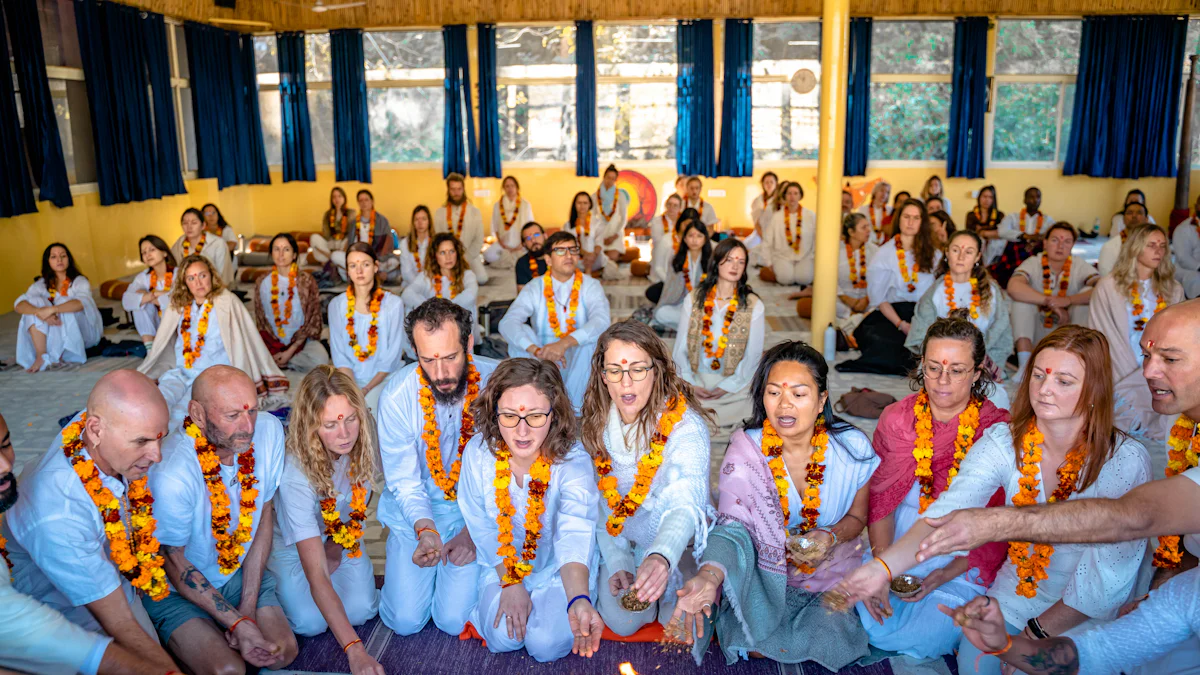
Definition and Philosophy
Bhakti Yoga, one of the 4 paths of yoga, centers on love and devotion. You channel your emotions into a deep connection with the divine. This path encourages you to see God in everything and everyone, transforming your love for worldly things into a higher purpose. Through intense devotion, you cultivate a supreme attachment to the divine, leading to self-realization.
"Bhakti Yoga is the path of love. It is a yoga of divine worship, divine love." — Various Experts
Practices and Rituals
In Bhakti Yoga, you engage in various forms of worship and prayer. Chanting, known as kirtan, and the repetition of God's name, or japa, are powerful practices. Creating an altar or participating in group chanting can deepen your devotion. Community and fellowship play a vital role, as you join others in satsang, sharing stories and experiences that inspire collective spiritual growth.
Significance and Benefits
This path offers emotional and spiritual fulfillment. By surrendering to the divine, you transform your emotions into selfless devotion. Bhakti Yoga opens your heart, eliminating restlessness and distraction. You experience a profound connection with the divine, seeing the universe as a manifestation of sacred essence. This journey brings humility, compassion, and unconditional love, enriching your life and aligning you with the 4 paths of yoga.
Jnana Yoga: The Path of Knowledge, the third of 4 Paths of yoga
Definition and Philosophy
Jnana Yoga, one of the 4 paths of yoga, invites you to embark on a journey of wisdom. This path encourages you to seek knowledge about your true self and the universe. By questioning who you are, you begin to unravel the mysteries of existence. Jnana Yoga emphasizes understanding spirituality and progressing towards self-awareness. It is particularly suited for those with an intellectual inclination, as it involves analytical self-inquiry into your true nature.
"The path of knowledge is the path of self-realization and self-knowledge." — Various Experts
Practices and Study
In Jnana Yoga, meditation and contemplation become your tools for discovery. You engage in deep reflection, allowing your mind to explore profound truths. This practice helps you concentrate and discriminate between the real and the unreal. Alongside meditation, the study of sacred texts plays a crucial role. These texts provide insights and guidance, helping you navigate the complexities of life. By immersing yourself in these teachings, you gain a deeper understanding of the 4 paths of yoga and their interconnectedness.
Significance and Benefits
Jnana Yoga offers you intellectual and spiritual clarity. As you delve into the depths of knowledge, you begin to see the world with new eyes. This path leads you to self-realization, unveiling the essence of your being. Through Jnana Yoga, you achieve a harmonious balance between intellect and spirit. This journey enriches your life, aligning you with the 4 paths of yoga and guiding you towards enlightenment.
Raja Yoga: The Path of Meditation, the fourth of 4 Paths of yoga
Definition and Philosophy
Raja Yoga, known as the path of meditation, guides you in mastering mental control. This practice focuses on the mind's power, helping you achieve a state of transcendental consciousness. It is often referred to as Ashtanga Yoga, highlighting its eight-limbed approach to self-discipline and spiritual growth.
The Science of Mental Control
In Raja Yoga, you learn to harness your thoughts and emotions. This path teaches you to quiet the mind, allowing you to explore deeper levels of consciousness. By practicing mental discipline, you gain clarity and insight, paving the way for spiritual awakening.
Foundational Principles
The foundational principles of Raja Yoga include ethical guidelines, self-discipline, and meditation. These elements work together to help you control your body, mind, and senses. Through this holistic approach, you align yourself with the 4 paths of yoga, embracing a journey toward enlightenment.
Practices and Techniques
Raja Yoga incorporates various practices to support your meditation journey. These techniques help you cultivate focus and inner peace.
Asanas and Pranayama
Asanas, or physical postures, prepare your body for meditation. They promote flexibility and strength, creating a stable foundation for your practice. Pranayama, the art of breath control, enhances your ability to concentrate and calm the mind. Together, these practices form a vital part of Raja Yoga, connecting you to the 4 paths of yoga.
Meditation and Concentration
Meditation lies at the heart of Raja Yoga. You engage in silent meditation, transforming bodily and mental energies into spiritual energy. Concentration techniques help you focus your mind, leading to profound inner stillness. This practice empowers you to explore the depths of your consciousness, aligning with the ultimate goals of the 4 paths of yoga.
Significance and Benefits
Raja Yoga offers numerous benefits, enriching both your mental and spiritual well-being.
Mental Peace and Focus
By practicing Raja Yoga, you cultivate mental peace and focus. This path helps you manage stress and anxiety, promoting a sense of calm and balance. As you develop concentration, you enhance your ability to navigate life's challenges with clarity and purpose.
Spiritual Awakening
Raja Yoga leads you toward spiritual awakening. Through meditation and self-discipline, you connect with your true self, experiencing a profound sense of unity with the universe. This journey aligns you with the 4 paths of yoga, guiding you toward a life of fulfillment and enlightenment.
Interconnectedness of the 4 Paths of yoga
Yoga's beauty lies in its ability to weave together diverse practices into a harmonious whole. The 4 paths of yoga—Karma, Bhakti, Jnana, and Raja—each offer unique insights, yet they complement one another, creating a rich tapestry of spiritual growth.
Complementary Nature
How the Paths Support Each Other
Each path of yoga supports and enhances the others. Karma Yoga teaches you to act selflessly, which purifies your heart and prepares you for deeper devotion in Bhakti Yoga. This devotion, in turn, opens your mind to the wisdom of Jnana Yoga, where you seek knowledge and self-realization. As you gain insight, Raja Yoga helps you control your mind, leading to profound meditation experiences. Together, these paths guide you toward unity and liberation from the cycle of karma.
Integrating Multiple Paths in Practice
Integrating multiple paths enriches your practice. You might start your day with meditation from Raja Yoga, engage in selfless service through Karma Yoga, and end with devotional chanting from Bhakti Yoga. This holistic approach aligns your actions, emotions, and thoughts, fostering a balanced and fulfilling life. By embracing all paths, you discover the essence of existence and connect with both the individual and universal soul.
Collective Aim
Spiritual Growth and Enlightenment
The collective aim of the 4 paths of yoga is spiritual growth and enlightenment. Each path purifies different aspects of your being—mind, heart, and spirit—leading you to self-realization. Through this journey, you uncover the Truth of the Divine Self, experiencing unity with the universe. This transformation liberates you from suffering and guides you toward a life of peace and fulfillment.
Holistic Development
Yoga encourages holistic development, nurturing every facet of your existence. By practicing these paths, you cultivate ethical action, deep devotion, profound wisdom, and mental discipline. This comprehensive growth not only enriches your personal life but also contributes positively to society. As you evolve, you inspire others to embark on their own spiritual journeys, creating a ripple effect of love and understanding.
"Yoga aims to teach unity and liberation from the cycle of karma through various philosophies like Vedanta and Samkhya."
Embrace the interconnectedness of the 4 paths of yoga. Let them guide you toward a deeper understanding of yourself and the universe, fostering a life of harmony and enlightenment.
The 4 paths of yoga—Karma, Bhakti, Jnana, and Raja—unite to form a comprehensive spiritual journey. Each path offers unique insights, yet they collectively aim for spiritual growth and enlightenment. By embracing these paths, you nurture your mind, heart, body, and spirit. This holistic approach encourages you to explore and integrate the teachings into your daily life. As you embark on this journey, remember that combining these paths can lead you to self-realization and a deeper connection with the universe. Let the wisdom of yoga guide you toward a life of harmony and fulfillment.
See Also
Exploring the Advantages of Dynamic Yoga
Investigating Vijay's Yoga Path and Its Influence
Selecting the Perfect Yoga School for Your Path

Hi my name is Lia and i am your host in this yoga journey in Portugal, Subscribe to our newsletter to receive every week the best of Yoga in Portugal.

We bring back the importance of initiation into womanhood by Roos-Veerle Krijnen & Ella-June Henrard
Welcome to the Women’s Initiation Retreat by Naked Truth Retreats, a transformative journey into the depths of your True Feminine Nature. This retreat invites you to remember the sacredness and wholeness of your being.
Roos-Veerle Krijnen & Ella-June Henrard