How to Master Standing Yoga Asanas for Beginners

Mastering standing yoga asanas is crucial for building strength and balance. These poses target major muscle groups like the legs, core, and upper body, enhancing flexibility and endurance. As a beginner, approach these poses with patience and mindfulness. Concentration and focus are essential to align your body and maintain balance, which sharpens attention and improves memory. Incorporating standing poses into your regular yoga practice invigorates and rejuvenates you, promoting overall well-being. For further guidance, consider exploring a standing yoga asanas pdf to deepen your understanding and practice.
Understanding the Basics of Standing Yoga Asanas
Importance of Alignment and Balance
Key principles of alignment
Alignment in yoga is essential for achieving balance, symmetry, and harmony in your practice. Proper alignment ensures that your body distributes weight evenly, reducing pressure on joints and tissues. This not only enhances the experience of each pose but also prevents injuries. To maintain alignment, focus on stacking your joints. For example, in standing poses, align your knees over your ankles and your hips over your knees. Engage your core muscles to support your spine and keep your shoulders relaxed. This foundation helps you build strength and stability.
Tips for maintaining balance
Balance is a crucial component of standing yoga asanas. It improves your overall body awareness and stability. To enhance your balance, start by grounding your feet firmly into the mat. Spread your toes and distribute your weight evenly across both feet. Engage your core muscles to stabilize your center of gravity. Focus your gaze on a fixed point in front of you, known as a drishti, to help maintain concentration. Practice regularly to develop muscle memory and improve your balance over time.
Breathing Techniques
Importance of breath in yoga
Breathing is a fundamental aspect of yoga that connects your mind and body. It enhances your focus and stability during poses. Deep, controlled breaths help you relax and maintain your posture. In yoga, the breath acts as a guide, allowing you to move with intention and mindfulness. Proper breathing techniques can also increase your lung capacity and improve circulation, contributing to overall well-being.
How to synchronize breath with movement
Synchronizing your breath with movement is key to a fluid yoga practice. Begin by inhaling deeply through your nose as you prepare to move into a pose. As you exhale, transition into the pose, allowing your breath to guide the movement. For example, in a forward bend, inhale as you lengthen your spine and exhale as you fold forward. This rhythm creates a seamless flow, enhancing your practice and helping you stay present in the moment. Practice this synchronization to cultivate a deeper connection between your breath and movements.
Simple Standing Yoga Asanas for Beginners
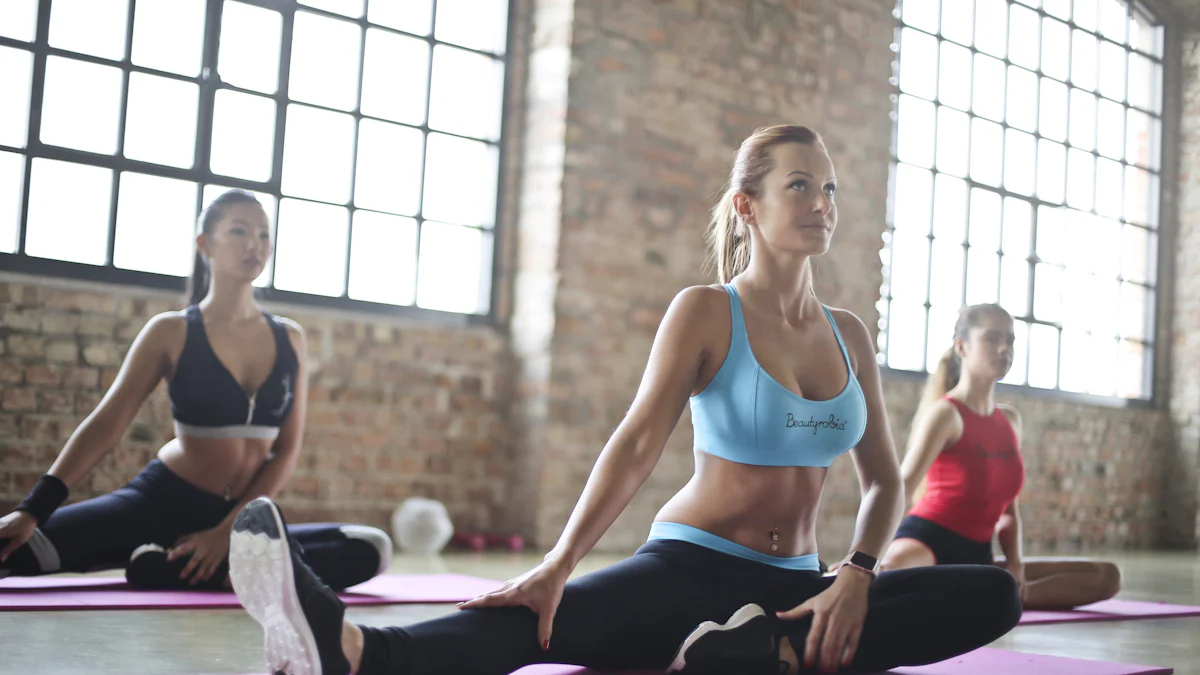
Mountain Pose (Tadasana)
Step-by-step instructions
Stand tall with your feet together or hip-width apart. Ensure your weight is evenly distributed across both feet.
Engage your thigh muscles and lift your kneecaps without locking your knees.
Lengthen your spine by lifting through the crown of your head. Keep your shoulders relaxed and away from your ears.
Let your arms hang naturally by your sides, with palms facing forward.
Focus on your breath. Inhale deeply and feel your chest expand. Exhale slowly, grounding yourself into the earth.
Dr. Hansaji Yogendra, a renowned yoga expert, emphasizes that standing poses like Tadasana anchor us firmly to the earth while inviting us to reach for the sky.
Benefits and tips for beginners
Benefits:
Improves posture and alignment.
Strengthens legs, core, and back muscles.
Enhances focus and concentration.
Tips:
Practice in front of a mirror to check your alignment.
Visualize a straight line running from your feet to the top of your head.
Start with short durations and gradually increase as you build strength.
Tree Pose (Vrksasana)
Step-by-step instructions
Begin in Mountain Pose. Shift your weight onto your left foot.
Bend your right knee and place the sole of your right foot on your left inner thigh or calf. Avoid placing it directly on the knee.
Press your hands together in a prayer position at your chest or extend them overhead.
Find a focal point in front of you to help maintain balance.
Hold the pose for several breaths, then switch sides.
Standing yoga poses challenge our balance, flexibility, and focus, as noted by Dr. Hansaji Yogendra.
Benefits and tips for beginners
Benefits:
Enhances balance and stability.
Strengthens the legs and core.
Promotes mental clarity and calmness.
Tips:
Use a wall for support if needed.
Keep your gaze steady to improve balance.
Practice regularly to develop muscle memory and confidence.
By incorporating these simple standing yoga asanas into your practice, you lay a strong foundation for more advanced poses. Remember, consistency is key to mastering these postures and reaping their full benefits.
Intermediate Standing Yoga Asanas
Warrior I (Virabhadrasana I)
Step-by-step instructions
Begin in Mountain Pose. Step your left foot back about 3-4 feet, keeping your right foot forward.
Turn your left foot slightly inward, aligning your heels.
Bend your right knee over your ankle, ensuring it doesn't extend past your toes.
Raise your arms overhead, palms facing each other. Keep your shoulders relaxed.
Square your hips and chest towards the front. Engage your core for stability.
Hold the pose for several breaths, then switch sides.
B.K.S. Iyengar, a yoga master, describes Warrior I as a pose that embodies strength and grace, encouraging practitioners to stand tall and confident.
Benefits and tips for beginners
Benefits:
Strengthens legs, shoulders, and arms.
Opens the chest and lungs, improving breathing capacity.
Enhances focus and mental resilience.
Tips:
Use a wall for support if you struggle with balance.
Keep your front knee aligned with your ankle to prevent strain.
Practice regularly to build strength and flexibility.
Warrior II (Virabhadrasana II)
Step-by-step instructions
Start in Mountain Pose. Step your left foot back, keeping your right foot forward.
Turn your left foot out to a 90-degree angle, aligning your heels.
Bend your right knee over your ankle, ensuring it stays above your heel.
Extend your arms parallel to the floor, palms facing down.
Gaze over your right fingertips, keeping your shoulders relaxed.
Hold the pose for several breaths, then switch sides.
Judith Hanson Lasater, a yoga teacher, emphasizes that Warrior II cultivates inner strength and determination, helping you face challenges with courage.
Benefits and tips for beginners
Benefits:
Strengthens legs, hips, and core muscles.
Increases stamina and endurance.
Improves concentration and body awareness.
Tips:
Focus on your breath to maintain stability.
Ensure your front knee aligns with your second toe.
Use a mirror to check your alignment and posture.
By practicing these intermediate standing yoga asanas, you enhance your strength and stability. These poses challenge your balance and concentration, paving the way for more advanced postures. Consistent practice will lead to noticeable improvements in your yoga journey.
Advanced Standing Yoga Asanas
Extended Side Angle Pose (Utthita Parsvakonasana)
Step-by-step instructions
Begin in Warrior II with your right foot forward.
Bend your right knee, ensuring it aligns over your ankle.
Lower your right hand to the floor or a block outside your right foot.
Extend your left arm over your head, creating a straight line from your left foot to your fingertips.
Rotate your torso towards the ceiling, opening your chest.
Hold the pose for several breaths, then switch sides.
B.K.S. Iyengar, a yoga master, describes this pose as a way to stretch and strengthen the entire body, enhancing flexibility and endurance.
Benefits and tips for beginners
Benefits:
Strengthens legs, knees, and ankles.
Stretches the groins, spine, waist, chest, and lungs.
Improves stamina and balance.
Tips:
Use a block under your hand if reaching the floor is challenging.
Keep your front knee aligned with your second toe.
Focus on opening your chest to deepen the stretch.
Half Moon Pose (Ardha Chandrasana)
Step-by-step instructions
Start in Warrior II with your right foot forward.
Shift your weight onto your right foot and lift your left leg parallel to the floor.
Place your right hand on the floor or a block in front of your right foot.
Extend your left arm towards the ceiling, stacking your shoulders.
Gaze at your left hand or forward for balance.
Hold the pose for several breaths, then switch sides.
Judith Hanson Lasater, a yoga teacher, emphasizes that Half Moon Pose challenges your balance and focus, promoting mental clarity and calmness.
Benefits and tips for beginners
Benefits:
Strengthens the abdomen, ankles, thighs, buttocks, and spine.
Stretches the groins, hamstrings, and calves.
Improves coordination and balance.
Tips:
Use a wall for support if needed.
Keep your gaze steady to maintain balance.
Practice regularly to develop muscle memory and confidence.
By incorporating these advanced standing yoga asanas into your practice, you challenge your strength, balance, and flexibility. These poses not only enhance your physical capabilities but also improve your focus and body awareness. Consistent practice will lead to noticeable improvements in your yoga journey.
Common Mistakes and How to Avoid Them
Misalignment Issues
Common alignment errors
In standing yoga asanas, misalignment can lead to discomfort or even injury. You might find your knees extending beyond your toes in poses like Warrior I or Warrior II. This misalignment places unnecessary strain on your joints. Another common error is uneven weight distribution, where you lean more on one side, causing imbalance. Incorrect alignment of the ankle, foot, and knee can also occur, leading to instability.
How to correct them
To correct these alignment issues, focus on stacking your joints properly. In Warrior poses, ensure your knee aligns directly over your ankle. Distribute your weight evenly across both feet to maintain balance. Engage your core muscles to support your spine and keep your shoulders relaxed. Using props like blocks can help you achieve proper alignment, especially if you struggle with flexibility. Regular practice with attention to alignment will enhance your posture and prevent injuries.
Balance Challenges
Common balance issues
Balance challenges often arise from a lack of focus or muscle engagement. You might find yourself wobbling or losing stability in poses like Tree Pose or Half Moon Pose. This instability can result from not grounding your feet properly or failing to engage your core muscles. Additionally, shifting your gaze too frequently can disrupt your balance.
Tips to improve balance
Improving balance requires practice and mindfulness. Start by grounding your feet firmly into the mat, spreading your toes to create a stable base. Engage your core muscles to stabilize your center of gravity. Focus your gaze on a fixed point, or drishti, to maintain concentration. Practicing regularly will help develop muscle memory and improve your balance over time. If needed, use a wall for support until you gain confidence in your balance. Remember, consistency is key to mastering these poses and reaping their full benefits.
Tips for a Successful Practice
Setting a Regular Practice Schedule
Importance of consistency
Consistency in your yoga practice is key to unlocking its full benefits. Regular practice helps you build strength, flexibility, and mental clarity. It also aids in stress management and enhances your overall well-being. By committing to a consistent schedule, you create a routine that supports your physical and mental health. This regularity allows you to progress steadily, making each session more rewarding.
How to create a practice routine
Creating a practice routine involves setting realistic goals and finding a time that fits your lifestyle. Start by deciding how many days a week you can dedicate to yoga. Aim for at least 2-3 challenging sessions weekly, with daily practice being ideal for fitness and stress relief. Choose a time of day when you feel most energized, whether it's morning or evening. Keep your sessions varied to maintain interest and challenge different muscle groups. Use a calendar or planner to track your progress and stay motivated.
Listening to Your Body
Understanding your limits
Listening to your body is crucial in yoga. Each person has unique limits, and recognizing them prevents injury and promotes a safe practice. Pay attention to any discomfort or pain during poses. Modify or skip poses that don't feel right. Yoga is not about pushing beyond your limits but about connecting with your body and understanding its needs. This awareness fosters self-acceptance and encourages a more mindful practice.
Importance of rest and recovery
Rest and recovery are essential components of a successful yoga practice. They allow your body to heal and adapt to the physical demands of yoga. Incorporate rest days into your routine to prevent burnout and overuse injuries. Use these days to focus on gentle stretching or meditation. Recovery enhances your performance and ensures long-term sustainability in your practice. Remember, yoga is a journey, not a race. Prioritize rest to maintain balance and enjoy the process of growth and self-discovery.
Mastering standing yoga asanas plays a vital role in enhancing your overall yoga practice. These poses not only strengthen your legs and spine but also improve your flexibility, balance, and posture. As you embark on this journey, practice regularly and embrace patience with your progress. Enjoy the process of learning and refining your yoga skills. Remember, resources like a standing yoga asanas pdf can offer further guidance and support. Use these tools to deepen your understanding and enrich your practice, ensuring a rewarding and fulfilling yoga experience.
See Also
A Beginner's Guide To Practicing Yoga Asanas
Discovering Different Styles Of Yoga Asanas
Introductory Veena Yoga Techniques For Newcomers

Hi my name is Lia and i am your host in this yoga journey in Portugal, Subscribe to our newsletter to receive every week the best of Yoga in Portugal.

We bring back the importance of initiation into womanhood by Roos-Veerle Krijnen & Ella-June Henrard
Welcome to the Women’s Initiation Retreat by Naked Truth Retreats, a transformative journey into the depths of your True Feminine Nature. This retreat invites you to remember the sacredness and wholeness of your being.
Roos-Veerle Krijnen & Ella-June Henrard