Comprehensive Guide to Yoga Poses and Their Names

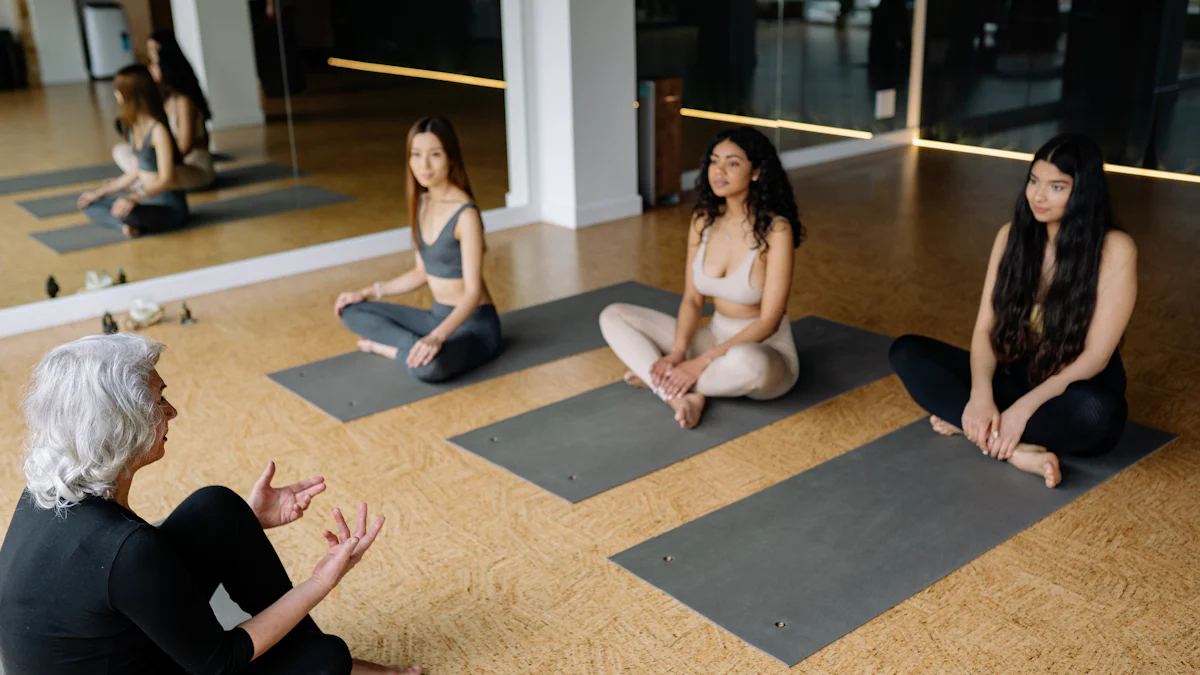
Learning yoga poses with names in both Sanskrit and English enriches your practice. Sanskrit names, like Tadasana or Vrksasana, carry deep cultural and spiritual meanings. Understanding these names connects you to yoga’s ancient roots and fosters mindfulness. Studies show that yoga improves physical and mental health, including reducing stress and enhancing flexibility. Knowing the names also helps you communicate effectively in classes and deepen your study. This knowledge transforms yoga into more than exercise—it becomes a holistic journey for your body and mind.
Key Takeaways
Learning yoga poses in both Sanskrit and English enhances your practice and connects you to yoga's rich cultural heritage.
Understanding the names of poses helps improve communication in classes and deepens your overall yoga experience.
Incorporating standing poses like Tadasana and Utkatasana builds strength, balance, and mindfulness in your practice.
Seated poses such as Sukhasana and Padmasana promote relaxation and flexibility, essential for a well-rounded yoga routine.
Practicing backbends like Bhujangasana and Urdhva Dhanurasana opens your heart and boosts emotional resilience.
Inversions, including Viparita Karani and Sirsasana, enhance mental clarity and energy levels, transforming your perspective.
Restorative poses like Savasana are crucial for integrating your practice, promoting deep relaxation and mental well-being.
Standing Poses: Yoga Poses with Names
Standing poses form the foundation of your yoga practice. These poses build strength, improve posture, and enhance balance. They also help you connect with your breath and body alignment. By learning yoga poses with names, you can better understand their purpose and incorporate them into your routine effectively.
Foundational Standing Poses
Tadasana (Mountain Pose)
Tadasana, or Mountain Pose, is the starting point for many standing poses. This pose teaches you to stand tall and steady, like a mountain. To practice Tadasana, stand with your feet together, arms by your sides, and shoulders relaxed. Engage your thighs and lift your chest while grounding your feet. This pose improves posture and creates a sense of stability. It also helps you focus on your breathing, which is essential for mindfulness.
Utkatasana (Chair Pose)
Utkatasana, or Chair Pose, strengthens your legs and core. Begin by standing in Tadasana. Bend your knees as if sitting in an invisible chair, keeping your back straight. Raise your arms overhead and gaze forward. This pose challenges your endurance and builds lower body strength. Practicing Utkatasana regularly can improve your stamina and prepare you for more advanced poses.
Balancing Standing Poses
Vrksasana (Tree Pose)
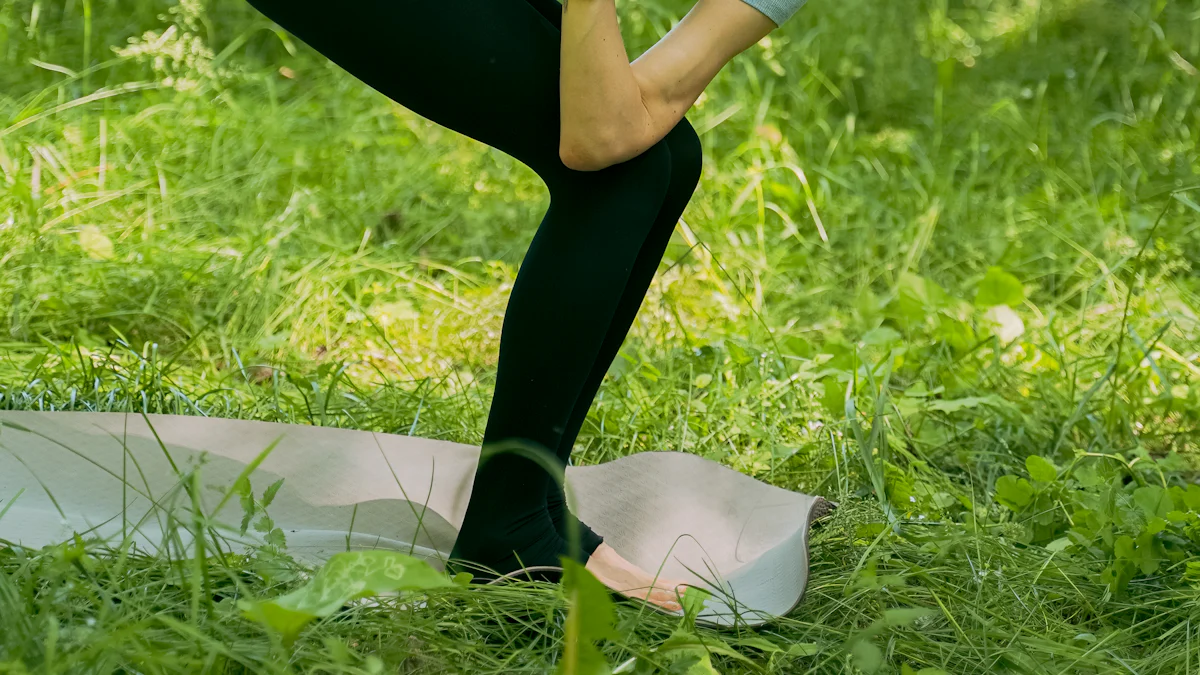
Vrksasana, or Tree Pose, enhances your balance and concentration. Start in Tadasana. Shift your weight onto one foot and place the sole of your other foot on your inner thigh or calf (avoid the knee). Bring your palms together at your chest or raise them overhead. Focus on a fixed point to maintain balance. This pose strengthens your legs and promotes mental clarity.
Garudasana (Eagle Pose)
Garudasana, or Eagle Pose, combines balance with flexibility. Stand in Tadasana and bend your knees slightly. Wrap one leg over the other and hook your foot behind your calf. Cross your arms in front of you, bringing your palms together. This pose stretches your shoulders and hips while improving focus. It also strengthens your legs and enhances coordination.
Warrior Poses
Virabhadrasana I (Warrior I)
Virabhadrasana I, or Warrior I, symbolizes strength and determination. Step one foot forward into a lunge position, keeping your back leg straight. Raise your arms overhead and gaze upward. This pose opens your chest and stretches your hips. It also strengthens your legs and improves your stamina.
Virabhadrasana II (Warrior II)
Virabhadrasana II, or Warrior II, builds endurance and stability. From Warrior I, open your hips and arms to the side, keeping your front knee bent. Gaze over your front hand. This pose strengthens your legs and core while enhancing focus. It also stretches your inner thighs and shoulders.
Virabhadrasana III (Warrior III)
Virabhadrasana III, or Warrior III, challenges your balance and strength. From Warrior I, lean forward and lift your back leg parallel to the ground. Extend your arms forward or keep them by your sides. This pose strengthens your legs, core, and back. It also improves your balance and concentration.
Seated Poses: Yoga Poses with Names
Seated poses provide a stable foundation for your yoga practice. These poses promote flexibility, relaxation, and mindfulness. They also help you focus on your breath and improve your posture. By learning yoga poses with names, you can better understand their significance and incorporate them into your routine effectively.
Basic Seated Poses
Sukhasana (Easy Pose)
Sukhasana, or Easy Pose, is a simple cross-legged position that encourages relaxation and mindfulness. Sit on the floor with your legs crossed and your spine straight. Rest your hands on your knees or in your lap. Focus on your breath and allow your body to relax. This pose calms your mind and improves your posture. It also helps open your hips and lengthen your spine.
Padmasana (Lotus Pose)
Padmasana, or Lotus Pose, is a classic seated posture often used for meditation. Sit on the floor with your legs extended. Bend one knee and place your foot on the opposite thigh. Repeat with the other leg. Keep your back straight and your hands resting on your knees. This pose enhances flexibility in your hips and knees. It also promotes mental clarity and inner peace.
Forward Bends
Paschimottanasana (Seated Forward Bend)
Paschimottanasana, or Seated Forward Bend, stretches your entire back body. Sit with your legs extended in front of you. Inhale and lengthen your spine. Exhale and fold forward, reaching for your feet or ankles. Keep your back straight and avoid straining. This pose improves flexibility in your hamstrings and lower back. It also calms your mind and reduces stress.
Janu Sirsasana (Head-to-Knee Pose)
Janu Sirsasana, or Head-to-Knee Pose, combines a forward bend with a side stretch. Sit with one leg extended and the other foot placed against your inner thigh. Inhale and lengthen your spine. Exhale and fold over your extended leg, reaching for your foot. This pose stretches your hamstrings, spine, and shoulders. It also stimulates your digestive organs and promotes relaxation.
Twisting Poses
Ardha Matsyendrasana (Half Lord of the Fishes Pose)
Ardha Matsyendrasana, or Half Lord of the Fishes Pose, is a seated twist that improves spinal mobility. Sit with your legs extended. Bend one knee and place your foot outside the opposite thigh. Place your hand behind you for support and twist your torso toward your bent knee. This pose stretches your spine, shoulders, and hips. It also stimulates your internal organs and improves digestion.
Bharadvajasana (Bharadvaja’s Twist)
Bharadvajasana, or Bharadvaja’s Twist, is a gentle seated twist that enhances flexibility. Sit with your legs folded to one side. Place one hand on your knee and the other behind you. Twist your torso gently, keeping your spine tall. This pose relieves tension in your back and shoulders. It also improves spinal flexibility and promotes relaxation.
Backbends: Yoga Poses with Names
Backbends are transformative yoga poses that open your body and mind. These poses stretch the front of your body, strengthen your back, and improve spinal flexibility. Practicing backbends can feel challenging at first, but they offer a profound sense of expansion and release when done correctly. They also help you build self-confidence and emotional resilience. Backbends encourage you to open your heart, fostering a deeper connection to yourself and the world around you.
Gentle Backbends
Bhujangasana (Cobra Pose)
Bhujangasana, or Cobra Pose, is a gentle backbend that strengthens your spine and opens your chest. To practice this pose, lie on your stomach with your legs extended and your palms placed under your shoulders. Press into your hands and lift your chest while keeping your elbows slightly bent. Engage your back muscles and avoid straining your lower back. This pose improves posture and relieves tension in your shoulders and neck. It also energizes your body and promotes a sense of openness.
"I had to change my perception of backbends: They not only require bending your spine, they require openness along the whole front side of your body."
This realization highlights the importance of stretching your thighs, hips, and abdomen to fully benefit from backbends like Bhujangasana.
Salabhasana (Locust Pose)
Salabhasana, or Locust Pose, strengthens your back and improves spinal mobility. Begin by lying on your stomach with your arms by your sides and your palms facing down. Inhale and lift your chest, arms, and legs off the ground. Keep your gaze forward and engage your core for stability. This pose builds strength in your lower back, glutes, and hamstrings. It also enhances your posture and prepares you for deeper backbends.
Practicing gentle backbends like Salabhasana can help you overcome initial challenges and build the foundation for more advanced poses. These poses encourage you to explore your limits while maintaining a sense of control and mindfulness.
Deep Backbends
Urdhva Dhanurasana (Wheel Pose)
Urdhva Dhanurasana, or Wheel Pose, is a powerful backbend that opens your chest and shoulders while strengthening your entire body. Lie on your back with your knees bent and your feet hip-width apart. Place your hands beside your ears with your fingers pointing toward your shoulders. Press into your hands and feet to lift your body into an arch. This pose stretches your spine, hips, and thighs. It also boosts energy levels and enhances your sense of vitality.
Backbends like Urdhva Dhanurasana have the potential to open your heart, both physically and emotionally. The heart chakra, known as Anahata in Sanskrit, represents love and connection. Opening this center can help you experience a deeper sense of unity and compassion.
Dhanurasana (Bow Pose)
Dhanurasana, or Bow Pose, combines a backbend with a chest opener. Start by lying on your stomach with your arms by your sides. Bend your knees and reach back to hold your ankles. Inhale and lift your chest and thighs off the ground, creating a bow shape with your body. This pose stretches your entire front body, including your chest, abdomen, and thighs. It also strengthens your back and improves flexibility.
Practicing deep backbends like Dhanurasana can feel intense, but they reward you with a sense of freedom and empowerment. These poses challenge you to embrace vulnerability and trust in your strength.
"You might feel incredibly challenged when you try on yoga backbends in your practice, but you’ll still feel a sense of expansion and release if you’re doing them correctly."
This insight reminds you to approach backbends with patience and persistence, allowing their benefits to unfold over time.
Inversions: Yoga Poses with Names
Inversions are transformative yoga poses that shift your perspective—both physically and mentally. These poses involve positioning your heart above your head, which offers numerous physical and mental benefits. Practicing inversions strengthens your body, enhances flexibility, and improves focus. They also promote blood flow to the brain, which can boost energy levels and mental clarity. Whether you are a beginner or an advanced practitioner, inversions can elevate your yoga practice to new heights.
Beginner-Friendly Inversions
Viparita Karani (Legs-Up-the-Wall Pose)
Viparita Karani, or Legs-Up-the-Wall Pose, is a gentle inversion that promotes relaxation and rejuvenation. To practice this pose, sit sideways next to a wall. Lie back and swing your legs up against the wall, keeping your hips close to the base. Rest your arms by your sides with your palms facing up. Close your eyes and focus on your breath.
This pose soothes your nervous system and reduces stress. It also improves circulation by encouraging blood flow from your legs to your upper body. Studies highlight how inversions like Viparita Karani can balance your hormonal system and enhance emotional well-being. This makes it an excellent choice for unwinding after a long day.
Adho Mukha Svanasana (Downward-Facing Dog)
Adho Mukha Svanasana, or Downward-Facing Dog, is a foundational yoga pose that combines strength and flexibility. Begin on your hands and knees. Tuck your toes under and lift your hips toward the ceiling, forming an inverted V-shape with your body. Keep your hands shoulder-width apart and your feet hip-width apart. Press your heels toward the ground and lengthen your spine.
This pose stretches your hamstrings, calves, and shoulders while strengthening your arms and core. It also increases blood flow to your brain, which can improve focus and reduce fatigue. A 2015 study found that beginner-friendly inversions like Adho Mukha Svanasana enhance the mind-body connection and build endurance. Practicing this pose regularly can prepare you for more advanced inversions.
Advanced Inversions
Sirsasana (Headstand)
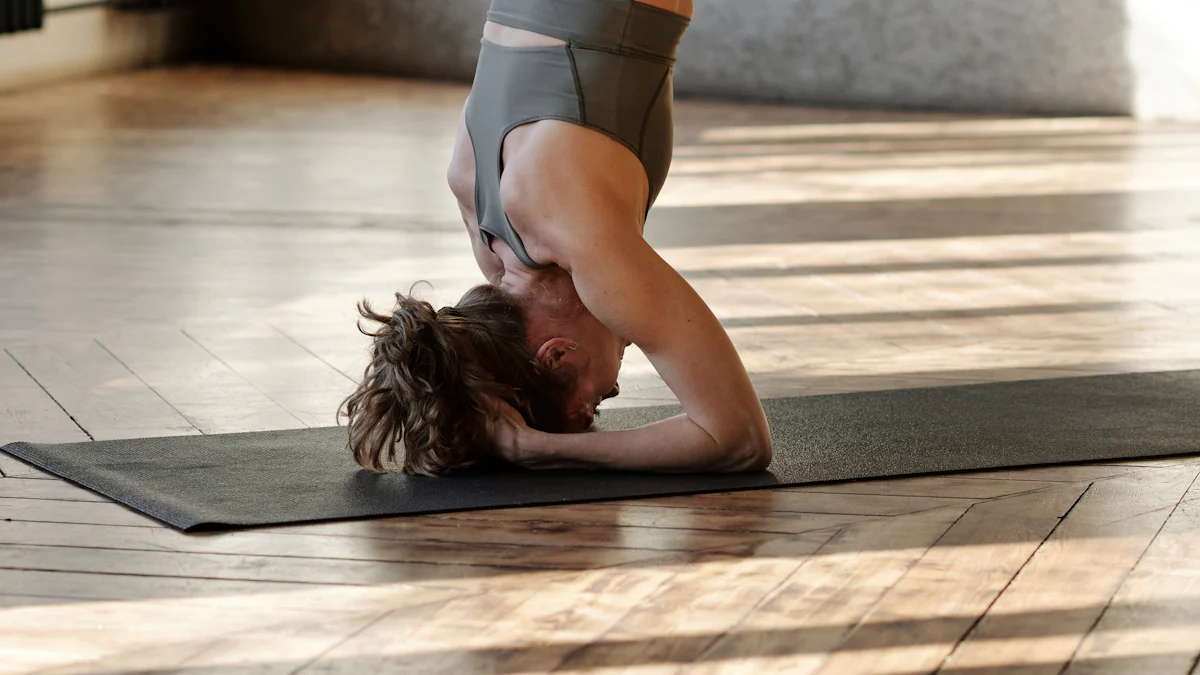
Sirsasana, or Headstand, is often called the "king of yoga poses" due to its profound benefits. To practice this pose, kneel on the ground and interlace your fingers to form a stable base. Place the crown of your head on the ground and your hands around the back of your head. Lift your hips and walk your feet closer to your body. Slowly lift your legs off the ground, straightening them toward the ceiling.
This pose strengthens your shoulders, arms, and core. It also increases blood flow to your brain, which can boost mental clarity and release feel-good chemicals like serotonin and dopamine. A 2017 study revealed that advanced inversions like Sirsasana enhance brain function and improve emotional well-being. Practicing this pose requires focus and patience, but the rewards are worth the effort.
"Inversions challenge you to see the world from a new perspective, both physically and mentally."
This insight captures the transformative nature of poses like Sirsasana, which encourage you to embrace growth and change.
Sarvangasana (Shoulderstand)
Sarvangasana, or Shoulderstand, is a powerful inversion that strengthens your entire body. Lie on your back and lift your legs toward the ceiling. Place your hands on your lower back for support and straighten your legs. Keep your neck relaxed and your gaze upward.
This pose improves spinal health and stimulates your thyroid gland, which helps regulate your metabolism. It also enhances core strength and promotes balance in your hormonal system. Research highlights how inversions like Sarvangasana increase blood flow and boost energy levels. Practicing this pose can leave you feeling revitalized and centered.
Advanced inversions like Sarvangasana and Sirsasana require practice and dedication. They challenge your strength, balance, and focus, but they also offer unparalleled benefits for your body and mind.
Restorative and Relaxation Poses: Yoga Poses with Names
Restorative and relaxation poses provide a sanctuary for your body and mind. These poses help you release tension, calm your nervous system, and restore energy. They are essential for balancing the more active aspects of your yoga practice. By learning these yoga poses with names, you can deepen your understanding of their purpose and incorporate them into your routine for maximum benefit.
Restorative Poses
Balasana (Child’s Pose)
Balasana, or Child’s Pose, offers a gentle way to relax and stretch your body. Begin by kneeling on the floor and sitting back on your heels. Lower your torso forward, resting your forehead on the mat. Extend your arms in front of you or place them by your sides. Focus on your breath as you allow your body to sink into the pose.
This pose stretches your lower back, hips, and thighs. It also soothes your mind and reduces stress. Practicing Balasana regularly can help you reconnect with your breath and find a sense of inner peace. Many practitioners use this pose as a resting position during their yoga sessions.
Supta Baddha Konasana (Reclining Bound Angle Pose)
Supta Baddha Konasana, or Reclining Bound Angle Pose, encourages deep relaxation and opens your hips. To practice this pose, lie on your back and bring the soles of your feet together. Let your knees fall open to the sides, forming a diamond shape with your legs. Place your arms by your sides or rest them on your abdomen.
This pose gently stretches your inner thighs and groin while calming your nervous system. It promotes a sense of openness and ease in your body. You can enhance the restorative effects by using props like a bolster under your back or blankets under your knees. Supta Baddha Konasana is ideal for unwinding after a long day or preparing for meditation.
Final Relaxation Pose
Savasana (Corpse Pose)
Savasana, or Corpse Pose, is the ultimate relaxation pose in yoga. Lie flat on your back with your legs extended and your arms resting by your sides. Close your eyes and focus on your breath. Allow your body to fully relax, releasing any tension from head to toe.
This pose helps you integrate the benefits of your yoga practice. It calms your mind, reduces stress, and promotes a state of deep rest. Studies show that relaxation poses like Savasana can improve mental clarity and emotional well-being. Practicing this pose at the end of your session allows you to experience complete stillness and mindfulness.
"In Savasana, you surrender to the present moment, letting go of all effort and simply being."
This quote captures the essence of this pose, which invites you to embrace peace and tranquility.
Restorative and relaxation poses remind you of the importance of rest in your yoga journey. They create space for healing and renewal, helping you cultivate balance in both your practice and your life.
Learning yoga poses with names in both Sanskrit and English enriches your practice on multiple levels. It deepens your connection to yoga’s cultural roots and enhances mindfulness, allowing you to experience the practice as more than just physical exercise. By exploring these poses further, you can build strength, flexibility, and self-awareness while fostering a sense of inner peace. Incorporating these names into your journey also helps you communicate effectively in classes and appreciate the spiritual essence of yoga. Embrace this knowledge to transform your practice into a holistic path of growth and well-being.
See Also
Essential Yoga Poses for New Practitioners
Yoga Basics: Tips and Tutorials for Beginners
Safely Perfecting Advanced Yoga Poses for All

Hi my name is Lia and i am your host in this yoga journey in Portugal, Subscribe to our newsletter to receive every week the best of Yoga in Portugal.

We bring back the importance of initiation into womanhood by Roos-Veerle Krijnen & Ella-June Henrard
Welcome to the Women’s Initiation Retreat by Naked Truth Retreats, a transformative journey into the depths of your True Feminine Nature. This retreat invites you to remember the sacredness and wholeness of your being.
Roos-Veerle Krijnen & Ella-June Henrard